Most "games to play with friends online" lists assume you are both free at eight on a Tuesday, with headsets on and nothing else to do. Real friendships are not like that. One of you works shifts, one of you is in another time zone, one of you had a day that used up all the words.
Turn-based games fix this. You make a move when you can, your friend makes theirs when they can, and the game carries on across days. There is no clock, no "are you there?", and no guilt about stepping away. A game of chess that lasts a fortnight is a fortnight of small, pleasant contact.
Here are the ones worth playing, and a bit about why this kind of game is so good for friendship.
Why a move at a time works
A turn is a small, finished thing. It takes thirty seconds, it says "I'm here, I'm thinking of you", and it asks for nothing beyond a move back. That is exactly the kind of contact that keeps a friendship alive between the longer conversations, and it is the kind that is easy to keep up when you are tired, anxious or busy.
It also gives you something to talk about. "I did not see that coming" is a message anyone can send.
Chess
The oldest and still the best. Lichess (free) and Chess.com both have correspondence modes where each move can take days, and both will let you play a friend by sharing a link. If you have not played since school, correspondence chess is the kindest way back in, because there is no clock pressure at all.
Word games
Words With Friends is Scrabble, a turn at a time, and has been the default "game with a friend who lives far away" for over a decade. The co-op version of the idea is a shared Wordle: one word, you take alternate guesses, nobody loses. We built one of those into our own app, called Wordsmith, and it is the game our members play most.
Board games online
Board Game Arena has hundreds of board games and a turn-based mode for most of them, so you can play Carcassonne or 7 Wonders across a week. It is free for most games, and it is the best option if you and your friend already like board games.
Co-op puzzles
Not every game needs a winner. A jigsaw you build together, a nonogram you solve a square each, a maze where one person sees the map and the other walks it. Co-op puzzles are turn-based without being competitive, which suits friendships where one of you is much better at games than the other.
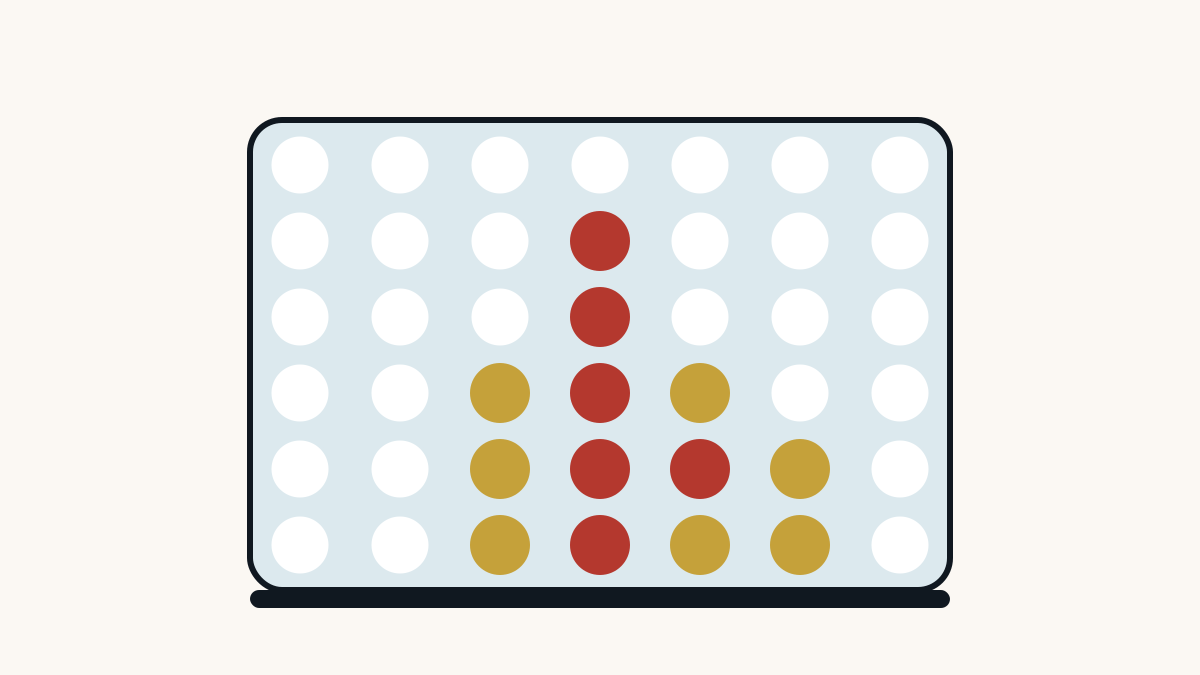
The simple ones
Noughts and Crosses, Connect 4, Battleships. Easy to learn, quick to play, and better than they sound, because the game is not really the point. The point is the two minutes of contact around it.
Where we come in
We make The Pebble Club, a free app for autistic adults, and it is built entirely around games like these. You are matched with someone who shares your interests, and then you play: Chess, Connect 4, Battleships, Noughts and Crosses, a co-op word game, a jigsaw, a nonogram, a guided maze, all a turn at a time, with no clock. The games are how you get to know each other; the conversation grows out of them, with question prompts to help when it is time to talk.
It is friendship first and games second, which is the other way round from everything else on this list. That is deliberate.
A few tips for playing with a friend
- Agree the pace once. "A move a day, roughly" removes the worry about whether you are too slow.
- Say when you are away. One message saves a week of wondering.
- Mix competitive and co-op. If one of you keeps winning, switch to a puzzle you solve together.
- Let the game carry the quiet weeks. Not every move needs a message. The move is the message.
If you would like to try ours, it is free on the App Store and Google Play, and there is more at thepebbleclub.com.