Bumble BFF is where most people start, because it is where most people are. You set up a profile, you swipe through other profiles, and when two people swipe right on each other you get a chat window. That is the whole product, and for a particular kind of person it works.
For a lot of us it does not. You are judged on a photo. The chat window is blank and the other person is waiting. There is a timer on matches, so taking a day to think is punished. And every match that goes quiet, which is most of them, feels like a small failure. If that sounds familiar, the problem is the format, not you.
Here is what else there is, and who each one is for.
Slowly
Slowly is a pen-pal app. You write letters rather than messages, and they take hours or days to arrive, depending on how far away the other person is. That sounds like a gimmick until you try it. The delay removes the pressure to reply now, letters are longer and more interesting than chat, and the people on it are self-selected for patience. It is one-to-one, text-based and calm. The downside is that it is slow to build anything, by design.
Meetup
Meetup is not an app for making friends so much as a list of groups you can join, from board games to walking to language exchanges. The friends come from going to the same group repeatedly. It is in person, which is a barrier for some, but it has the big advantage that you meet people while doing something, so there is no blank chat to fill. Many cities have autism and neurodivergent social groups listed on it.
Discord servers and forums
Not an app in the usual sense, but it is where a lot of introverted adults actually make friends: a server or forum for a game, a hobby or an interest, where you talk in a group and gradually get to know individuals. There is no matching and no profiles to judge, you can lurk for weeks before saying anything, and leaving is painless. The downside is that it can stay at the acquaintance level for a long time.
Hey! VINA and Peanut
Both are friendship apps for women, Peanut specifically for mothers and women going through fertility, pregnancy or menopause. They are swipe-based like Bumble BFF but with a narrower, warmer crowd, which for some women makes all the difference.
r/MakeNewFriendsHere and r/Needafriend are what they sound like: people post a short description of themselves and what they are looking for, and others reply. It is text-first, no photos needed, and nobody expects you to be charming. The quality varies a lot, and you need to be careful about who you give your details to.
The Pebble Club
This is ours, so weigh it accordingly. The Pebble Club is a free app for autistic adults, and it was built for exactly the problems with Bumble BFF above. There is no swiping: you are matched on what you are into. There is no blank chat: you start with a game, Chess, Connect 4, Battleships, a jigsaw you build together, a word puzzle you crack as a pair, and the conversation grows out of that. Everything is a turn at a time, so there is no timer and no shame in replying tomorrow. And there are question prompts you both answer privately before either of you sees the other's answer, so nobody has to go first.
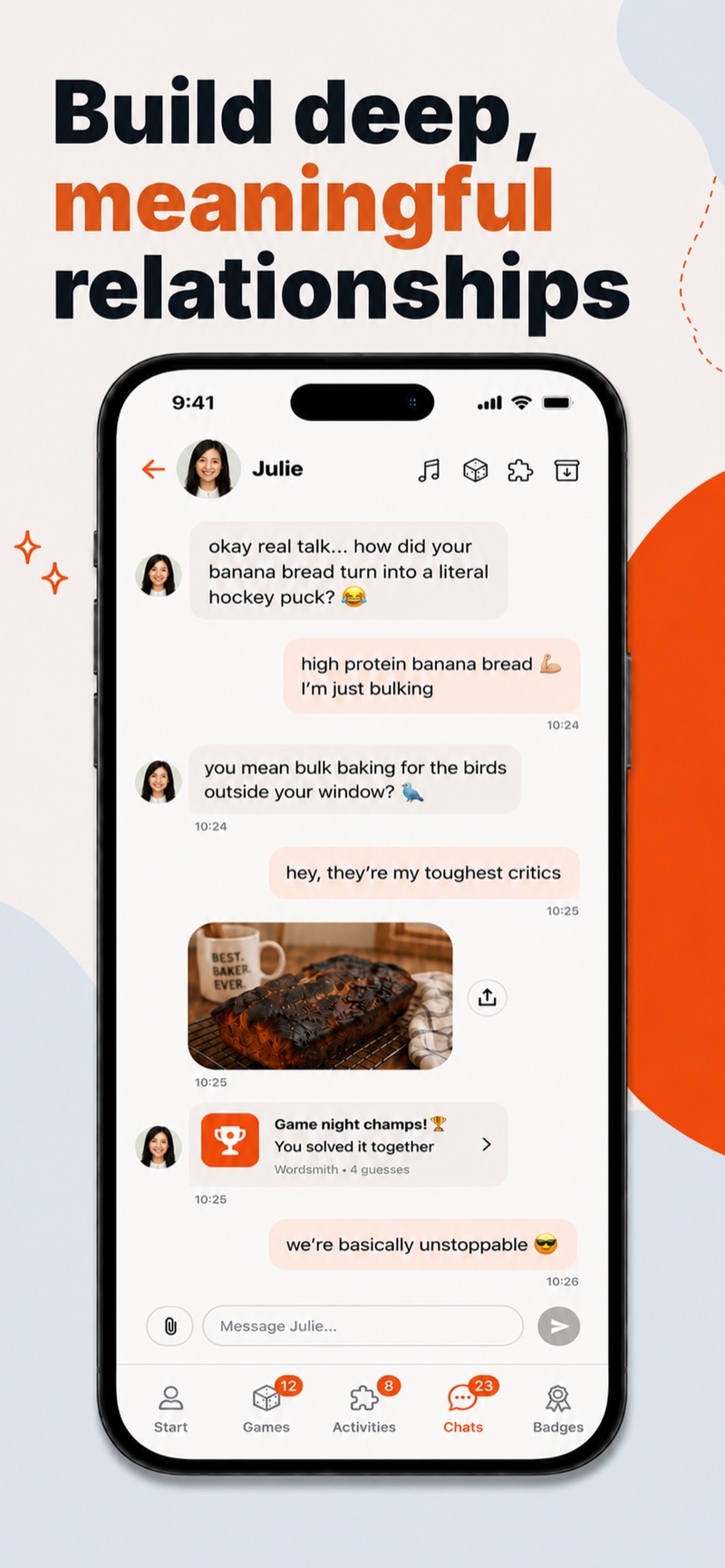
It is aimed at autistic adults but anyone is welcome. It is new, which means it is small, and we would rather say so. Here is a fuller, fair comparison of the friendship apps for autistic adults.
How to choose
Ask yourself two questions. Do you want to talk to one person or be part of a group? And do you want to start with conversation, or with something to do? Group plus activity points to Meetup or a Discord server. One person plus conversation points to Slowly. One person plus something to do is what we built.
Whatever you pick, give it a month and a few genuine tries before deciding. Every one of these apps is worse on the first day than the tenth, because on the tenth day you know someone.
If you would like to try ours, it is on the App Store and Google Play.